
TopHealth Products
Showing all 13 results
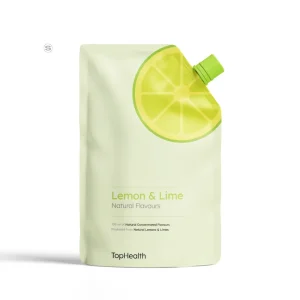
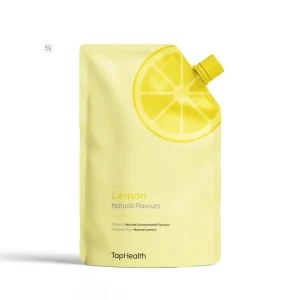
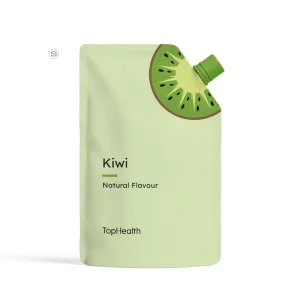
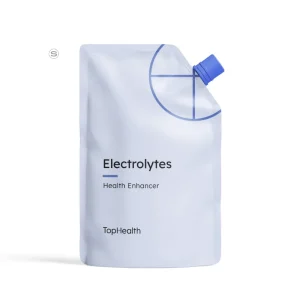
Flavours, enhancers and CO₂ for your TopHealth
Bag usage per flavour, Vitamin Mix, Electrolytes and Flavour Boost, CO₂ for sparkling drinks, and the cost to refill a full rack of nine bags.
Dose per drink — 2 ml per 250 ml (Lemon 1 ml), max 4 ml
Share of drinks that use each
The cost per drink counts the TopHealth bags only. CO₂ and the water filter are left out unless you tick them as add-ins above. This cost may not match other manufacturers' figures.
Drink menu — flavoured and plain water
How the drinks split between flavoured drinks and plain water. Plain cold, ambient and sparkling water can still have Vitamin Mix or Electrolytes added, but never a flavour or Flavour Boost. Every drink, plain or flavoured, counts toward the water filter.
Rack of 9 bags — usage and refill cost
Pick what sits in each slot. Flavour drinks are split evenly across the flavour slots; the same goes for each enhancer type.
| Slot · bag | ml / drink | Drinks / bag | Days / bag | Bags / mo | MSRP | Customer | Cost / month |
|---|---|---|---|---|---|---|---|
| Rack refill |
CO₂ for sparkling drinks
Water filter
Totals by period
| Per day | Per month | Per year |
|---|
Price list
Prices are set by Touchless Coffee and show our 10% discount off Scanomat MSRP. MSRP from shop.scanomat.com, TopHealth Consumables, checked 13 Nov 2026.
| Bag | SKU | MSRP $ |
|---|
Assumptions: all bags are 800 ml. Doses scale at 2 ml per 250 ml (Lemon 1 ml per 250 ml) up to the 4 ml maximum (override with the sliders). CO₂ uses Henry's-law solubility at the set pressure and temperature, times carbonator efficiency. A year is 12 months at the working-days setting. Filter cost is spread over the months a filter lasts (capped at the maximum life). Bags per month are exact usage; order whole bags.
How this calculator works
People
The number of people at the site who will use the TopHealth. Use the slider (up to 500) or type an exact number in the box. Everything else on the page scales from this number.
Drinks per person per day
How many drinks each person pours on an average working day, from 1 to 10. People × drinks per person gives the drinks per day, which is shown in the dark summary box.
Drink size
The size of an average drink. The three standard TopHealth sizes are 150 ml, 250 ml and 500 ml (use the buttons), or slide anywhere from 100 to 500 ml. Drink size sets how much flavour or enhancer goes into each drink, how much CO₂ a sparkling drink needs, and how much water passes through the filter.
Working days per month
How many days a month the machine is in use: 22 for weekdays, 26 for six days a week, 30 for every day, or any number from 1 to 31. Monthly figures are daily figures × working days. Yearly figures are 12 of those months.
Dose per drink
How many millilitres of each bag go into one drink. The TopHealth uses 2 ml per 250 ml drink for every bag except Lemon, which uses 1 ml per 250 ml. With Scale doses automatically ticked, the dose grows with drink size at that rate: 1.2 ml for 150 ml and 4 ml for 500 ml (Lemon gets half). 4 ml is the machine's maximum. Moving a dose slider yourself switches off auto-scaling, so you can match how the machine is actually set up; Lemon always stays at half the flavour dose. Each of the four types (Flavour, Vitamin Mix, Electrolytes, Flavour Boost) has its own dose.
Drink menu
Splits the day's drinks between flavoured drinks and plain cold, ambient and sparkling water. If the four don't add up to 100%, they're scaled so they do, and the line underneath shows the actual split and drinks per day. Only flavoured drinks use the flavour bags and Flavour Boost. Plain water can still have Vitamin Mix or Electrolytes added. Every drink, plain or flavoured, passes through the filter, so all of them count toward filter changes. Plain sparkling water counts toward CO₂.
Share of drinks that use each
Vitamin Mix and Electrolytes are a percentage of all drinks, plain water included. Vitamin Mix at 30% means 3 in 10 drinks get vitamins. Flavour Boost is a percentage of flavoured drinks only. One drink can have a flavour, vitamins and Flavour Boost all at once, so these don't need to add up to 100. Usage for each is the number of drinks that use it × the dose.
Consumables per drink
The large number in the dark box is the cost of the TopHealth bags in one drink: the monthly bag cost divided by the drinks poured in a month. Bag prices are MSRP less the customer discount (10% by default). CO₂ and the water filter are add-ins: they're left out unless you tick them under the box. That's why this figure can differ from cost-per-cup numbers from other manufacturers, which often include them. The totals table follows the same add-in choices.
The rack — 9 bags
The TopHealth holds nine bags. Choose what sits in each slot from its menu, or pick Empty slot to leave it unused. Flavour drinks are split evenly across all the flavour slots, so six flavours each get one sixth of the flavoured drinks. Enhancers are split the same way within their own type. For each slot the table shows:
- ml / drink: the dose for that bag's type.
- Drinks / bag: how many drinks one bag makes (bag size ÷ dose). All bags are 800 ml.
- Days / bag: how many working days that bag lasts at the current usage.
- Bags / mo: how many of that bag are used in a month. 0.50 means one bag every two months.
- MSRP and Customer: the Scanomat list price and the price after the customer discount.
- Cost / month: bags per month × customer price.
The bottom row and the cards below the table give the cost to refill the whole rack at once (every slot replaced), at MSRP and at the customer price, plus the total monthly bag spend. If a type has a share above 0% but no slot in the rack, a warning appears under the totals, because those drinks can't be counted.
Popularity and the first bag to run out
Flavours rarely sell evenly, and the mix can be different on every floor. Under the rack, set each bag to Low, Normal or High. A High bag gets twice the share of a Normal one, and a Low bag gets half. Leave everything on Normal for a new install, then update it from the machine's drink counts after a few weeks. The green box shows the first bag that will run empty and how many working days that takes. That's the real refill interval, since one empty bag means a service visit. For a runaway favourite, put it in two slots or use the 800 ml size.
Planning for fast-moving flavours
There's no way to know ahead of time which flavour will be most popular, and in a large building it can be different on every floor. These steps keep it under control:
- Expect an uneven mix. One or two flavours usually take most of the drinks. Plan refills around the first bag to run out, not the average.
- Start even, then use real numbers. Install with every bag on Normal. After 2–4 weeks, check the machine's drink counts per recipe and set the favourites to High and the slow sellers to Low.
- Double up the winner. Put the most popular flavour in two slots so it lasts twice as long. The same bag can be chosen in more than one slot.
- Use 800 ml bags for fast movers where an 800 ml version exists.
- Swap out the slowest flavour. Try a different one in its place, or leave the slot empty.
- Keep a spare on site. One extra bag of each of the top two flavours means a fast seller running out doesn't need an emergency visit.
- Treat each floor as its own machine. Keep a separate mix for each unit. Similar areas, such as office floors versus a gym or lobby, tend to behave alike.
CO₂ for sparkling drinks
Set how many flavoured drinks are served sparkling (plain sparkling water from the drink menu is added on top) and the carbonation pressure (3.2 bar on average). The calculator works out how much CO₂ dissolves in a litre of water at that pressure and water temperature. Colder water holds more CO₂. That figure is then multiplied by the carbonator's efficiency, because an inline carbonator doesn't fully saturate the water; 60–70% is typical. The result is shown as grams of CO₂ per litre and per drink. Choose the cylinder size (5, 10 or 25 lb) and enter the gas supplier's price per fill to see how many days a cylinder lasts, how many cylinders are needed per month and year, and the monthly CO₂ cost. CO₂ is bought from the customer's own gas supplier.
Water filter
The TopHealth uses a Brita PURITY C1000 AC filter, rated for 10,000 litres, priced at $60. Water use is drinks per day × drink size. A filter is changed when it has filtered 10,000 L, or after 12 months, whichever comes first. A quiet site changes it once a year; a busy site reaches 10,000 L sooner and changes it more often. The cards show water used per day, how long a filter lasts ("(max)" means the 12-month limit applies) and the filter cost per month. The 12-month limit can be lowered but not raised.
Totals by period
Drinks, flavour used, enhancers used, CO₂, cylinders, water, filters and total cost (bags + CO₂ + filter), per day, per month and per year.
Price list
MSRP for every TopHealth bag, taken from the Scanomat webshop. Touchless Coffee keeps these prices up to date.